Atividades M Antes De P E B 3 Ano
Learning through play is essential for your child's development. This guide will help you understand and implement activities to prepare your 3-year-old for school, focusing on motor skills (M), perception (P), and body awareness (B).
Understanding the Importance of M, P, and B Skills
Mastering motor skills, perception, and body awareness helps children become independent and ready for school. These skills enable them to handle daily tasks, follow instructions, and interact with their environment.
Essential Activities to Develop M, P, and B Skills
-
Motor Skills (M): Fine and gross motor activities help your child develop coordination and control over their movements.
- Building blocks: Encourage your child to stack, sort, and build with blocks to improve fine motor skills and hand-eye coordination.
- Playdough: Rolling, cutting, and shaping playdough enhances fine motor skills and creativity.
- Obstacle courses: Set up indoor or outdoor obstacle courses to develop gross motor skills, balance, and coordination.
-
Perception (P): Activities that improve perception help your child recognize, understand, and respond to visual and auditory stimuli.
- Puzzles: Solving puzzles enhances visual-perceptual skills, problem-solving, and logical thinking.
- Storytime: Reading aloud helps your child develop language skills, attention, and listening comprehension.
- Sorting games: Provide your child with various objects to sort by color, shape, or size to improve visual discrimination skills.
-
Body Awareness (B): Activities that promote body awareness help your child understand their body in space and develop self-regulation skills.
- Mirror play: Imitating movements in front of a mirror helps your child develop body awareness and coordination.
- Dance and music: Engaging in rhythmic activities like dancing or playing musical instruments fosters body awareness and self-expression.
- Sensory bins: Exploring different textures and materials in a sensory bin promotes body awareness and sensory integration.
Tools and Materials Needed
- Age-appropriate toys and games
- Playdough and sensory materials
- Books for reading and storytelling
- A safe and engaging environment for play and exploration
Common Mistakes to Avoid
- Over-scheduling activities: Allow your child time for free play and exploration to develop creativity and problem-solving skills.
- Comparing your child to others: Every child develops at their own pace; focus on your child's progress and achievements.
- Neglecting safety: Always supervise your child during activities to prevent accidents and ensure they are using materials safely.
Summary of Key Points
- Motor skills (M) activities improve coordination and control over movements.
- Perception (P) activities enhance visual and auditory skills, as well as problem-solving and language development.
- Body awareness (B) activities help children understand their body in space and develop self-regulation skills.
- Engage your child in various activities, using age-appropriate materials and a safe environment.
Perguntas frequentes
Quando devo começar a me preocupar com o desenvolvimento das habilidades M, P e B do meu filho?
A preocupação com o desenvolvimento dessas habilidades deve começar desde cedo. É recomendado incentivar atividades que estimulem o desenvolvimento de M, P e B desde o nascimento do seu filho.
Meu filho não parece interessado em algumas atividades. O que eu faço?
Cada criança é única e tem seus próprios interesses. Se o seu filho não parecer interessado em uma atividade, tente apresentá-la de uma maneira diferente ou ofereça outras opções que envolvam o desenvolvimento de M, P e B.
Como posso saber se meu filho está pronto para a escola?
Seu filho estará pronto para a escola quando demonstrar habilidades adequadas em motoras, percepção e corpo, além de apresentar um bom nível de linguagem, atenção e socialização. É importante considerar também a maturidade emocional e a disposição para seguir rotinas e regras.
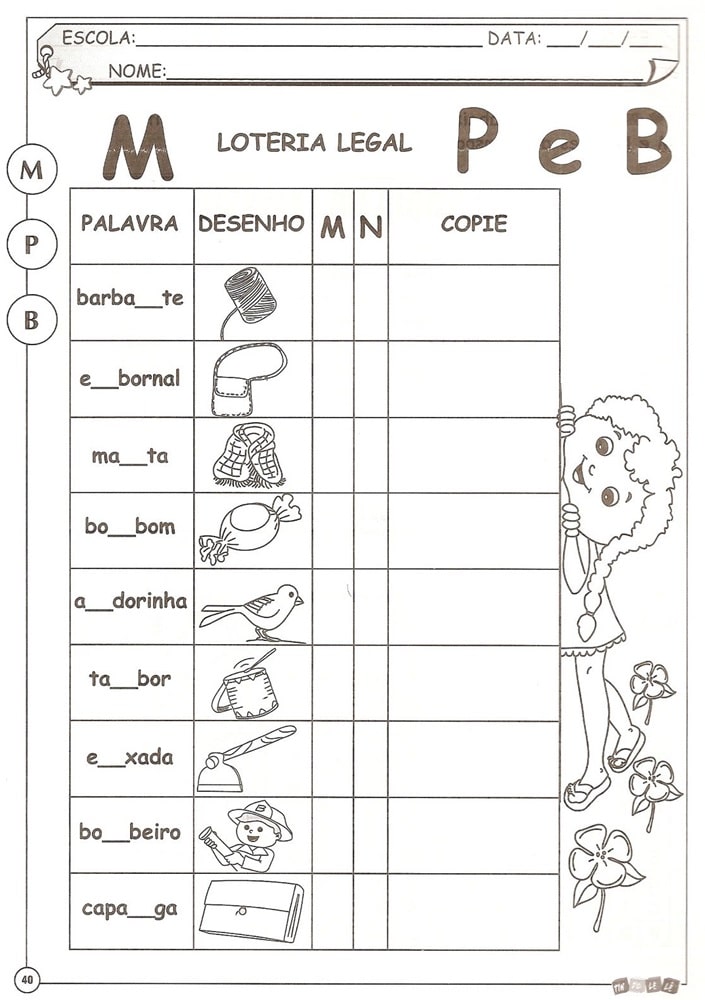
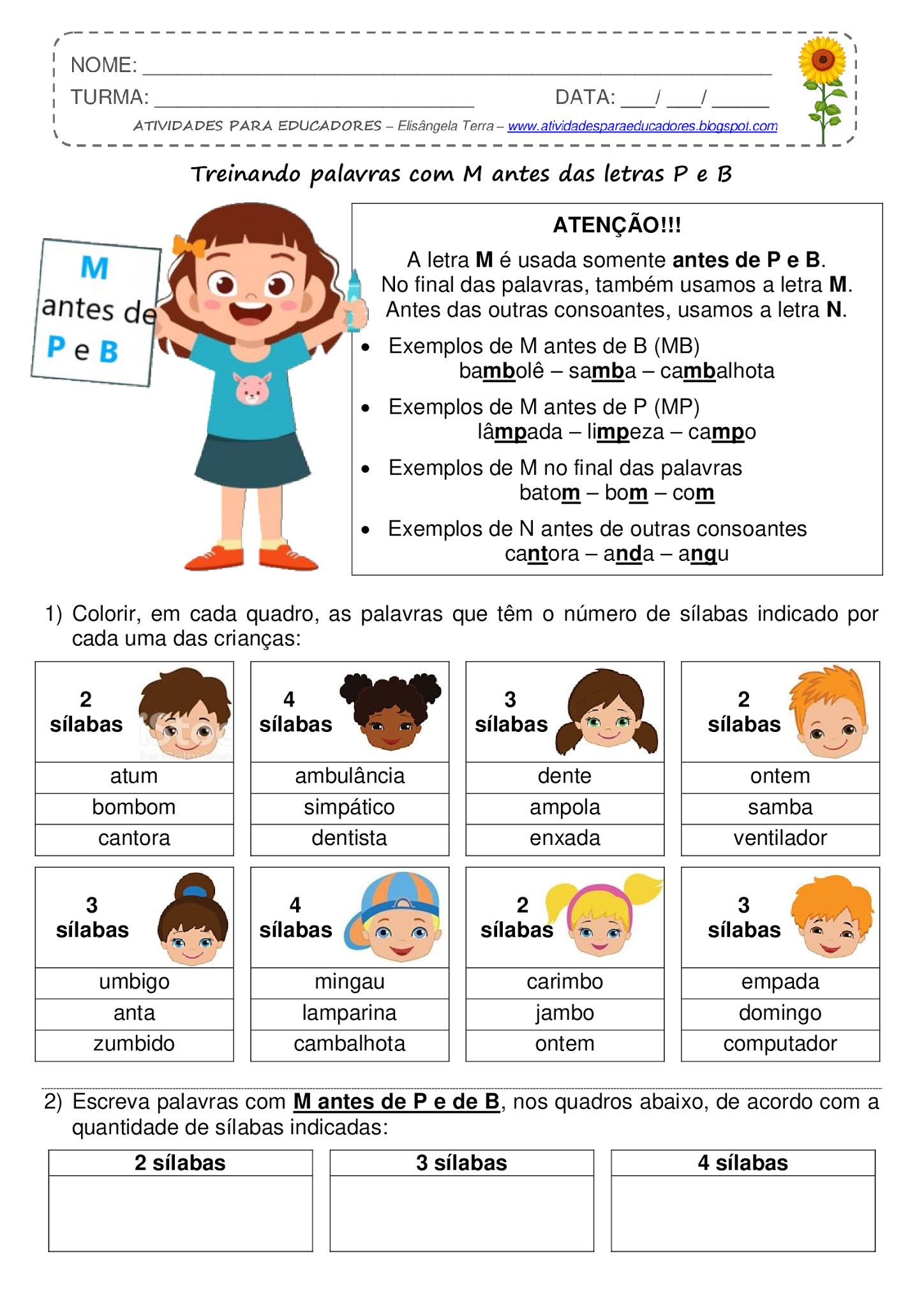
M antes de B E P - Ortografia - Alfabetização - Vídeo educativo
Neste vídeo, apresentamos o uso da letra M antes das consoantes B e P. Objetivos pedagógicos: Grafar palavras corretamente.
